Why engagement needs reform
How our campaign compares with the independent review, and what needs to work better.
Explore the review →Council as a platform
A real say. Action. Better services.
Wandsworth is asking how residents want to take part in housing decisions, after the housing regulator found weaknesses in how it takes tenants’ views into account. We want a real say, reliable, affordable services and support to improve our neighbourhoods and build community. Flip the pyramid: put the council’s resources behind residents, as a platform that helps us do more together.
Open to everyone living on a council estate
Residents raise concerns with their estate manager or through a Residents’ Association. Associations send representatives to area housing panels, which elect representatives to the Borough Residents’ Forum. Co-operatives and sheltered residents have routes too. Issues raised with estate managers do not automatically reach those meetings; at best, they may appear in aggregate reports.
The Housing Committee is no longer the council’s strategic decision-making body. That is now Cabinet. For residents unfamiliar with these structures, it is hard to know where to start or how to get an issue heard. There are too many steps between raising a concern and seeing action.
We want a clearer way to see what happens to the issues we raise: what was agreed, who will act and when. See the other routes and our proposed changes.
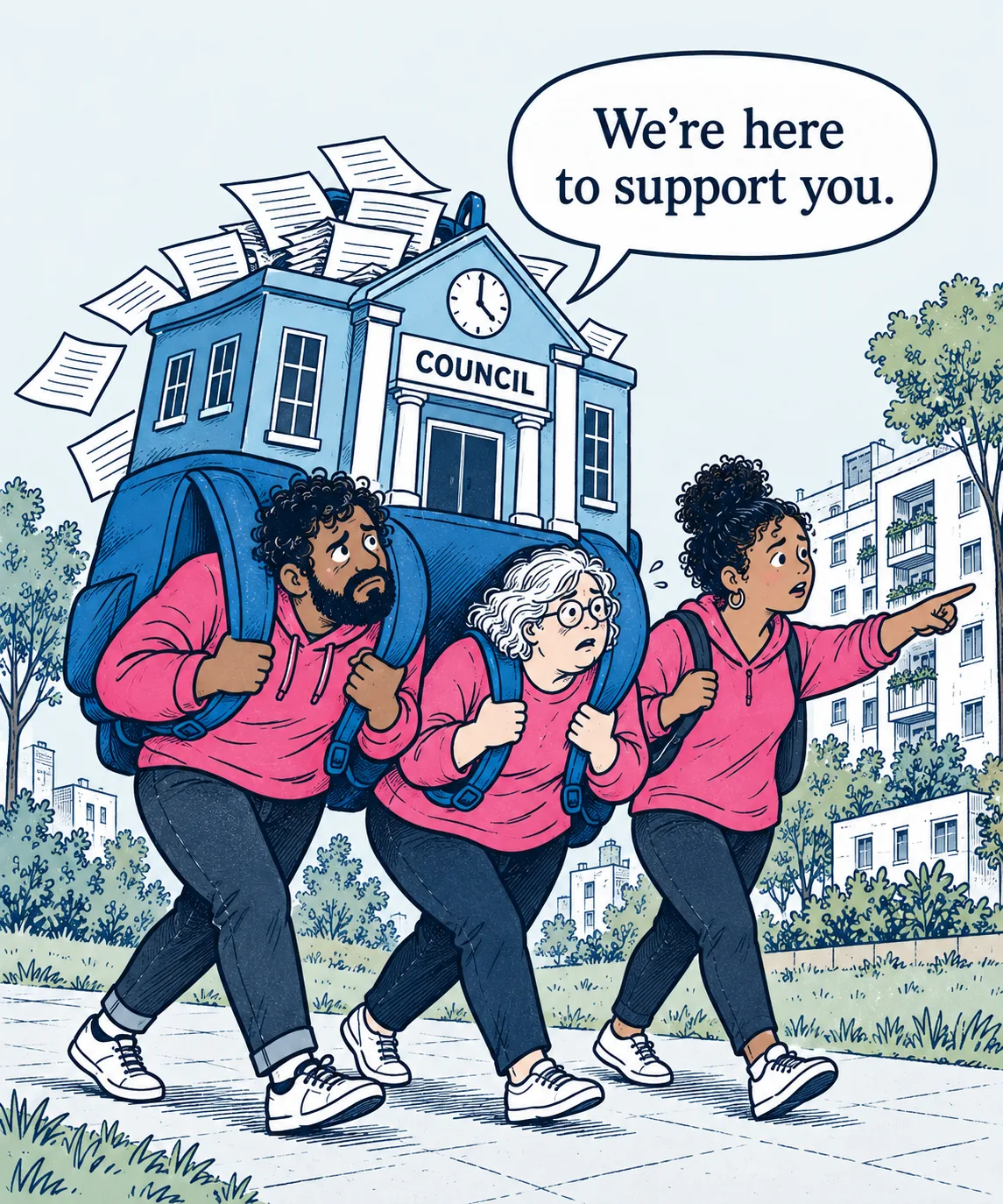
We want a landlord that does the basics well. Meetings and surveys take time. When residents raise issues and nothing changes, people stop taking part.
On our estate, bike removal warnings reached roughly 200 letterboxes. But the Residents’ Association was asked to put up participation posters across seven blocks, leaving unpaid volunteers to distribute the council’s own communications.
The council knows how to reach every household. We want the same effort when it asks for our views, and action on what we say.
The strategy says the council "can be confident that the range of opportunities available remain appropriate". Our question is simpler: do residents trust that taking part will change anything? The new strategy needs to ask that too.
The strategy was signed off in early 2024. A year later, the Regulator of Social Housing graded Wandsworth C3, the second-lowest of four grades. It found serious failings on safety and quality, and weaknesses in how the council takes tenants’ views into account and shows how they were considered. The council is now aiming for C1, the top grade. That is the right ambition. Getting there starts with trust, and a new strategy with room for all five of these words.

Heard, helped and valued. That is how we want residents to be treated.
The designers of Wandsworth's 2025 brand say the bold W wrapping around the council's name symbolises its commitment to "surrounding the borough with support, ensuring residents feel heard, helped, and valued". We want to see that in how the council deals with residents, not just in its branding.
We want residents and the council to work out the details together. These are the six things we think the result needs to do.
Deal with the issues residents have already raised and show what is changing when asking for more of our time.
Residents should help set the agenda and agree who chairs meetings, with support for whoever takes the role.
Co-design the new structure with residents before key decisions are made.
Residents should choose what to scrutinise and get answers to recommendations, with reasons, timescales and progress updates.
The council should meet residents where they already spend time, including young people, and make it easy to have a say without joining a group or attending a meeting.
Judge it by outcomes residents help define: better services, improved neighbourhoods, stronger communities and decisions shaped by what we say.
The platform should help us move forward: improve our lives, look after our neighbourhoods and build stronger communities. The council’s job is to provide reliable, affordable services, funding and practical support. Residents bring local knowledge, ideas and the work of bringing neighbours together.
That should be a fair value exchange: the time and effort residents give should lead to real influence and support. Good services remain the council’s responsibility whether residents take part or not.
We have a part to play too: treating staff and neighbours with respect and using services responsibly. The council should consider how its decisions affect community life, avoid undermining it and actively support residents to get involved in their local community.
Anyone should be able to raise an issue directly or through a resident group. Joining a group should never be a condition of being heard. The council should connect what it hears across these routes, spot shared problems and get the right teams working on them.
You don’t have to sit on a panel or forum to benefit. A council that works as a platform is also a smarter council on the inside: teams joined up around the services residents use, not around its org chart, so one report reaches the right people and nobody has to chase between departments.
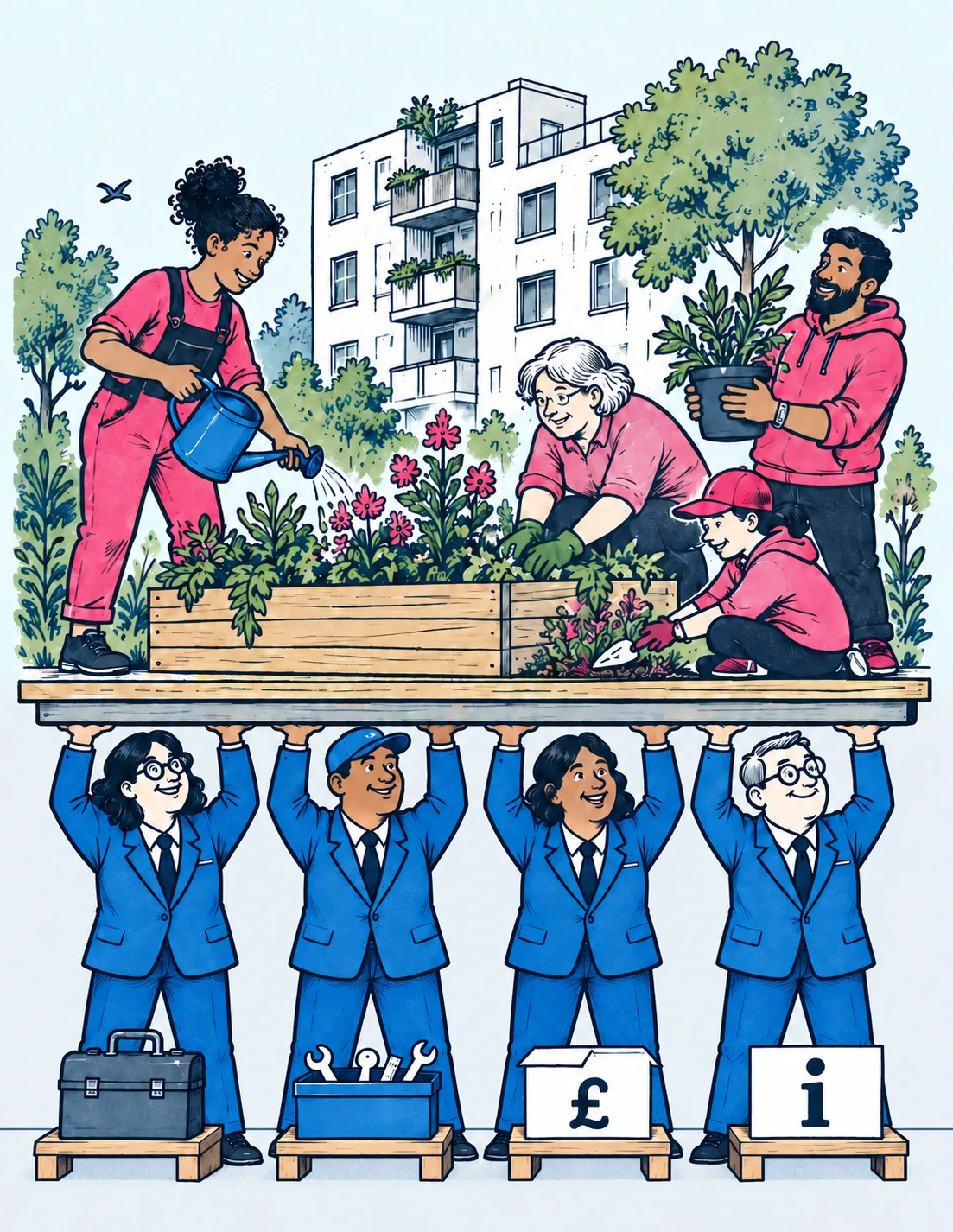
An illustrative sketch. The detail is for residents and the council to co-design.
The full strategy mentions youth activities and engagement through estate clubrooms. Clubrooms are not youth centres. Youth engagement needs a joined-up strategy linking schools, sports clubs and other local amenities.
We want the council to turn up at youth centres, sports sessions and other activities, sit with participants and ask open questions. Listen to what matters to them and show how their views change decisions. Support opportunities that bring people together across the borough and help break down barriers between communities.
The strategy sets no clear measures for whether youth engagement is working. We want to know who is being heard, who is missing and what changes as a result.
The decision to replace Access for All raises the same concern. Local reporting says it is closing without an evaluation. We think that is the wrong direction: before withdrawing support, show what it achieved and listen to the people who used it.
Residents’ Associations help at the point of need: sharing information, helping neighbours understand their options and advising how to take issues forward. Residents do not have to join to get support. RAs can help reach tenants who are not involved, but need council backing for this unpaid work. Everyone should also have a direct way to be heard.
Residents without an active association could be helped to connect with a neighbouring RA willing to support them. Participation officers could arrange opt-in introductions and agree how it works with both groups. Nobody should have to start an RA from scratch, or join one to have a say.
See residents’ practical ideas for local support, repairs and youth opportunities.
How our campaign compares with the independent review, and what needs to work better.
Explore the review →Residents’ practical ideas for repairs, local support and youth opportunities.
See practical ideas →The council plans to build its new strategy around a list of about 800 residents. Who is on it, who is missing, and how it fits with residents’ associations.
Audit the pool →Seven short films, about a minute each. Watch the series, then download the films to share with your residents’ association, group or neighbours.
Watch the films →Fill in the council's Resident Participation and Engagement Survey in your own words, ask to join the focus groups that follow, and pass this page to your neighbours.
Need it on paper or in another format? Contact the council's participation team:
Participationregister@wandsworth.gov.uk
020 8871 5679